
Quick Answer
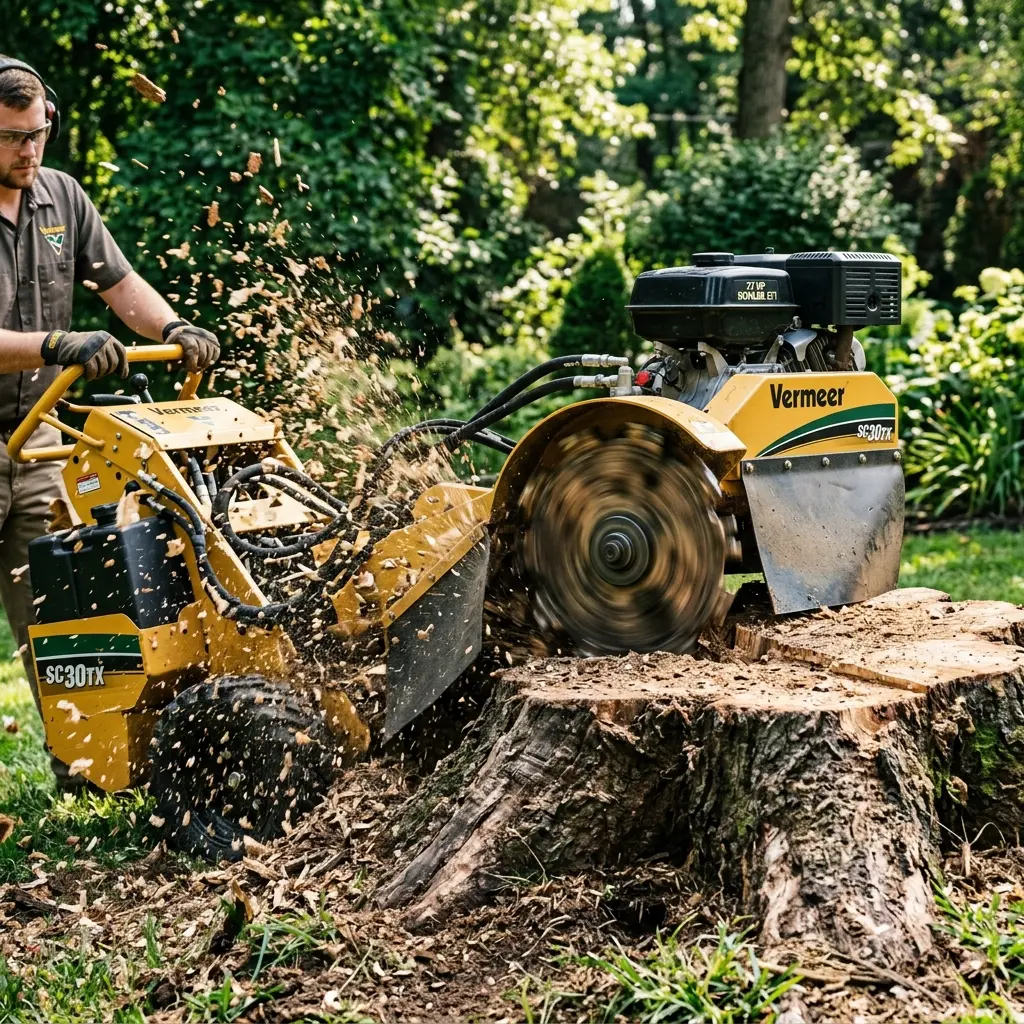
Stump grinding commonly costs $100 to $500 for a standard residential stump. The national average sits around $275 for a 24-inch stump. Prices are driven by diameter at the root flare, wood density, access, grind depth, and whether you haul the chips. Use the Stump Grinding Cost Calculator above for an instant estimate.
How Much Does Stump Grinding Cost?
A standard residential stump costs $100 to $500 to grind, with a national average of around $275. The actual pricing depends on the diameter of the stump at the root flare, its wood density, root complexity, grind depth, and your geographic location. For a typical 24-inch residential stump under normal access conditions, expect the estimate to land between $180 and $350.
Professional stump grinding companies typically charge either a flat rate per stump, a diameter-based rate (often ranging from $3 to $7 per inch), or an hourly rate for large-scale lot clearing. Most projects are subject to a minimum mobilization fee (usually $95 to $150) to cover the cost of bringing heavy machinery to your property. If you have multiple stumps that need to be ground at the same time, subsequent stumps are significantly cheaper because the mobilization fee is absorbed by the first stump. Additional stumps generally cost only $35 to $90 each.
For a typical 24-inch stump with standard access, the estimate usually lands between $180 and $350. Actual pricing varies with stump size, wood type, and regional labor rates — use the calculator above for a figure tailored to your specific stump.
Stump Grinding Cost by Diameter
Stump grinding cost by diameter is the standard pricing model because diameter directly correlates with the volume of wood the grinder's carbide-tipped wheel must pulverize. A 36-inch stump has roughly four times the cross-sectional area of an 18-inch stump, so the operator typically spends more time on site and wears down more grinding teeth — though actual labor also depends on root flare shape, species hardness, and machine type.
| Diameter | Typical Cost | Notes |
|---|---|---|
| Under 12 in | $75 - $150 | Often minimum-service pricing |
| 12 - 24 in | $120 - $300 | Common residential stump size |
| 24 - 36 in | $200 - $450 | Large stump or dense hardwood |
| 36+ in | $350 - $700+ | May need more time or larger industrial grinder |
Always measure the full width of the root flare (base) at soil level, rather than just the cut top surface. A stump with a 15-inch top cut often has a 24-inch base at ground level. Contractors price based on this base diameter.
Note that the ranges in this guide represent broad market estimates and can vary by contractor and location. Our calculator uses a standardized baseline model and then adjusts the estimate based on stump diameter, wood type, access, region, and selected services. Because of this, a calculator estimate may not match the midpoint of every market range.
Stump Grinding Price Per Inch (Full Chart)
Stump grinding cost per inch typically ranges from $3 to $7 when measured across the widest point of the root flare. This per-inch rate is the most common pricing model among professional contractors because it directly correlates with the volume of wood the grinding wheel must pulverize.
Here is the chart almost nobody publishes — per-inch math for every common diameter, plus the realistic total once the minimum callout fee is layered in. The right-hand column is what you should actually expect to pay:
| Stump Diameter (at root flare) | Per-Inch Math ($3–$7/in) | Realistic Total (incl. $95–$150 mobilization) |
|---|---|---|
| 8 in | $24–$56 | $95–$150 (minimum applies) |
| 12 in | $36–$84 | $100–$160 |
| 16 in | $48–$112 | $120–$200 |
| 20 in | $60–$140 | $150–$250 |
| 24 in | $72–$168 | $180–$320 |
| 30 in | $90–$210 | $220–$400 |
| 36 in | $108–$252 | $280–$480 |
| 42 in | $126–$294 | $340–$580 |
| 48 in | $144–$336 | $400–$700+ |
Why a 10-inch stump doesn't cost $30: every competitor's per-inch article skips the callout-minimum logic. The crew still has to load the grinder, tow it to your address, unload, set up, grind, and clean up — that fixed cost is the $95–$150 mobilization floor. Per-inch math only starts controlling the price once the stump is big enough to outgrow the minimum (roughly 16–18 inches and up). Below that, you're paying for the visit, not the inches — which is exactly why bundling several small stumps into one visit is the single best money move in this niche.
For example, a 20-inch stump at $5 per inch would cost $100 in grinding labor alone. Add the standard mobilization fee of $95 to $150, and the total comes to approximately $195 to $250. This is consistent with what our calculator produces for a 20-inch standard stump at national pricing.
Keep in mind that per-inch rates vary by wood type. Dense hardwoods (oak, hickory, walnut) command the upper end of the $3–$7 range because they wear down carbide teeth faster. Soft species like pine and cedar grind quickly and are priced at the lower end. Our calculator accounts for this via the "stump type" selector — selecting dense hardwood adds a 16% density premium to the base grinding cost.
Stump Grinding Cost by Number of Stumps
When you hire a pro, the largest fixed expense is mobilization—bringing the crew, truck, trailer, and heavy machinery to your yard. For this reason, grinding multiple stumps in a single visit is highly economical. While a single stump might cost $250, adding a second stump of similar size may only increase your bill by $50 to $75. If you have several stumps, it is always cheaper to clear them all at once rather than scheduling multiple callouts.
| Stump Quantity | Typical Cost Range | Average Cost per Stump | Key Factors |
|---|---|---|---|
| 1 Stump | $150 - $350 | $250 | Includes full mobilization fee of $95+ |
| 2 Stumps | $200 - $450 | $162 | Second stump shares mobilization cost |
| 3 Stumps | $250 - $550 | $133 | Subsequent stumps ground at a discount |
| 4+ Stumps | $300 - $800+ | $90 - $125 | Volume discount applies; flat rates common |
Stump Grinding Price Chart by Scenario
This chart consolidates every surcharge and discount in one place, so you can rebuild any quote line by line. Start with the base grind for your diameter (per-inch chart above), then apply what matches your job:
| Scenario / Add-On | Price Impact | When It Applies |
|---|---|---|
| Base grind, standard access | Per-inch chart above | Single stump, 4–8" depth, chips left on site |
| Each additional stump (same visit) | +$35–$90 per stump | Mobilization already absorbed by first stump |
| Surface / lateral root chasing | +$50–$150 | Radiating roots ground beyond the flare |
| Wide root flare (base ≫ top cut) | Priced by base diameter | Always measure the flare, not the top |
| Deep grind 12–18" (replanting/paving) | +30–50% of grind labor | Roughly +$60 on a 24-inch stump |
| Dense hardwood (oak, hickory, walnut) | +~16% density premium | Slower grinding, faster teeth wear |
| Tight access (gate under 36", slopes) | +25–50% | Walk-behind machine doubles grind time |
| Chip cleanup & haul-away | +$50–$150 | Shovel, load, and transport the chip pile |
| Full root-ball removal instead of grinding | $500–$1,500+ total | Excavation for construction or replanting |
Worked example from the chart: a 30-inch oak (base $220–$400) with surface roots (+$50–$150), deep grind (+~$90), and haul-away (+$75–$125) lands at $435–$765 — which is exactly the territory our calculator's Scenario 5 models below.
What Drives Your Stump Grinding Quote (6 Factors)
Several factors affect the price of stump grinding. The most important are the stump's size, the number of stumps, site access, wood type, grind depth, and cleanup.
1. Diameter & Root Flare
The primary pricing driver is the widest point of the stump near the ground line (the root flare), rather than the top cut. A wider base requires more grinding passes and increases wood volume exponentially.
2. Number of Stumps
As modeled above, the total quantity of stumps determines whether you receive volume discounts. The first stump absorbs the crew's travel and setup costs, making additional units far cheaper.
3. Root System & Surface Roots
If you select the "surface roots included" option in the calculator, the contractor must chase shallow, radiating lateral roots with the grinder. This takes additional time, requires careful dirt-clearing to avoid damaging the teeth, and increases the total footprint of the job.
4. Access & Terrain
Narrow gates (under 36 inches), steep slopes, stairs, or soft, manicured turf that prevents using heavy commercial ride-on grinders will drive up labor costs. If a technician has to use a small, walk-behind portable grinder, the job will take twice as long.
5. Cleanup (Chips & Backfill)
Grinding a stump produces a massive pile of wood chips mixed with soil—often three to four times the original volume of the stump. If you opt for chip hauling, the contractor must shovel, load, and transport the debris, adding to the cost. Leaving the chips on site as mulch is the budget-friendly choice.
6. Grind Depth & Wood Density
Standard grinding goes 4 to 8 inches below grade, which is sufficient for backfilling with dirt and planting grass seed. Replanting a new tree requires a deep grind of 12 to 18 inches, which increases costs. Additionally, dense hardwoods (like Oak, Hickory, or Walnut) or fibrous palms wear down machine teeth faster than softwoods (like Pine or Cedar), demanding a premium.
Stump Grinding vs. Stump Removal: Which Do You Need?
Many homeowners use the terms "grinding" and "removal" interchangeably, but they represent completely different operational procedures with vastly different price structures. Review this comparison to see which method suits your landscape goals:
| Feature | Stump Grinding | Full Stump Removal |
|---|---|---|
| Method | Shaves stump 4-18" below grade; roots remain | Excavates entire root ball out of ground |
| Cost Range | $100 - $500 per stump | $500 - $1,500+ per stump |
| Equipment | High-speed rotary grinding machine | Excavator, backhoe, or heavy winch |
| Yard Impact | Minimal; leaves a pile of chips and soil | Significant; leaves a large open crater |
| Replanting | Suitable for grass; requires deep grind for trees | Ideal for construction, paving, or direct replanting |
Choose Stump Grinding When:
- You want to plant grass, install a flower bed, or lay mulch over the area.
- You are on a budget and want to minimize yard disruption.
- The stump is in a tight residential yard near fences or landscaping.
Choose Full Removal When:
- You plan to lay a concrete foundation, driveway, or building structure.
- You want to plant a new, large tree in the exact same spot.
- You want to completely eliminate any chance of root-sprouting or fungal growth.
DIY Stump Grinding Cost vs. Hiring a Pro
For homeowners considering a DIY approach, renting a commercial walk-behind stump grinder typically costs $150 to $250 per day at major hardware stores. When you factor in the rental fee, fuel, transportation (requiring a truck and ramp or trailer), and safety gear, the entry cost for a DIY project is around $200 to $300.
While this might make sense if you have three or more small stumps (under 12 inches), it is rarely cost-effective or practical for large stumps. Rental grinders are typically underpowered (13–25 HP) compared to commercial contractor rigs (75–100+ HP). A job that takes a professional 15 minutes can easily take a homeowner 2 to 3 hours of grueling, physical labor.
⚠️ Crucial Safety Warning
Stump grinders are among the most dangerous landscaping tools you can rent. The high-speed cutting wheel can strike buried rocks, pipes, or metal, throwing shrapnel at extreme speeds or causing the machine to violently kick back. Never operate a grinder without steel-toed boots, heavy-duty safety glasses, and hearing protection. Always call 811 before grinding — grinder teeth cut deep into the soil and can easily sever gas, water, or electric lines.
How Deep Do They Grind a Stump?
Standard stump grinding removes the stump to 4 to 8 inches below grade. This depth is sufficient for backfilling with topsoil and planting grass seed over the area. Most residential jobs stop at this depth because it clears the stump from sight without the added time and cost of going deeper.
If you plan to plant a new tree in the same spot, pour a concrete pad, or install a paver patio, request a deep grind of 12 to 18 inches. Deep grinding takes approximately 30% to 50% longer than a standard grind and costs more — the calculator's "deep grind for replanting" toggle adds this premium automatically. For a 24-inch stump, deep grinding adds roughly $60 to the base estimate.
Always specify grind depth in your written quote. Some contractors default to a minimal 2-inch surface grind unless told otherwise, which may leave visible stump material after settling. A clearly itemized depth prevents disputes after the work is completed.
How Location Affects Stump Grinding Cost
Geographic location heavily influences stump grinding pricing due to local labor costs, fuel rates, waste disposal regulations, and soil composition. Below are the regional pricing multipliers used in our calculator, applied to a standard 24-inch residential stump:
| Region | Multiplier | 24-Inch Stump Estimate | Why It Differs |
|---|---|---|---|
| National Average | 1.00x | $230 - $330 | Baseline suburban labor and fuel rates |
| California | 1.24x | $290 - $410 | High fuel surcharges, strict organic waste disposal, elevated workers' comp premiums |
| Florida | 1.08x | $250 - $360 | Local soil conditions, stump species, and site conditions can affect grinding time and equipment wear |
| Texas | 0.96x | $220 - $320 | Competitive tree-service market; rocky Hill Country soils can add cost |
| New Jersey | 1.18x | $270 - $390 | Dense urban access, strict municipal permits, high local labor rates |
| New York | 1.22x | $280 - $400 | Strict noise ordinances, heavy traffic congestion, high minimum wage floors |
| Pennsylvania | 1.10x | $250 - $360 | Mix of urban and rural rates; uneven terrain and rockier soils in eastern counties |
| Illinois (Chicago Metro) | 1.14x | $260 - $380 | Urban congestion, suburban permit requirements, high disposal fees |
| Northeast Metro | 1.16x | $260 - $370 | Narrow access roads, tight property boundaries, complex utility layouts |
| Southeast / Gulf Coast | 1.06x | $240 - $350 | Stump condition and local climate can affect how difficult the wood is to grind, though species and moisture vary by property; lower labor costs outside major metros |
Use the "pricing market" dropdown in the calculator above to apply the correct regional multiplier. The estimates represent a single 24-inch standard stump with no add-ons — actual costs shift further with root grinding, deep grind, or chip hauling.
We are building dedicated state-by-state guides for each market. In the meantime, select your closest market from the calculator dropdown for the most accurate regional estimate.
Cost Examples
Review these worked scenarios generated directly from the calculator's algorithm. Each example shows how the combinations of inputs translate logically to the final price quote:
$160 - $220 Range (Est. $185) — Scenario 1: Small Single Stump (12 in)
Grinding a small 12-inch pine stump with easy yard access. Chips are left on site to fill the hole. Base mobilization matches baseline conditions.
$230 - $330 Range (Est. $275) — Scenario 2: Common Residential Stump (24 in)
A standard 24-inch maple stump in the backyard. Standard grinding depth with chips left on site. Accessible by typical commercial ride-on equipment.
$400 - $580 Range (Est. $480) — Scenario 3: Large Hardwood Stump with Roots (36 in)
A dense 36-inch oak stump with extensive surface roots that require tracing and grinding. Hardwood density triggers a premium on cutting time.
$530 - $760 Range (Est. $635) — Scenario 4: Multiple Stumps with Chip Haul-Away
Three separate 18-inch soft maple stumps. Mobilization is absorbed by the first unit. Debris is fully raked, loaded, and hauled away.
$610 - $870 Range (Est. $725) — Scenario 5: Difficult Access Hardwood Stump in California
A 30-inch hardwood oak stump in California with narrow gate access (tight access premium). Requires deep grinding for replanting and surface root work. High California labor and disposal factors apply.
How to Hire a Stump Grinding Company
When vetting local tree companies for stump grinding, ensure you ask these critical questions and confirm their procedures:
✓ Insurance & Workers' Comp Verification
Verify they carry general liability insurance specifically covering tree care operations (minimum $1 million) and active workers' compensation. Homeowner policies rarely cover injuries or damage caused by unauthorized tree contractors.
✓ Call 811 (Utility Locate Coordinator)
Underground lines are a major hazard. A reputable contractor should confirm that underground utilities have been properly located before grinding begins, either by coordinating the utility locate or verifying that the property owner has completed the required process. Striking a gas line or high-voltage electric conduit is catastrophic and highly expensive.
✓ Quote Itemization Checklist
Ensure your written quote details: grind depth (standard 4–8" vs. deep 12–18"), surface root grinding (whether adjacent roots are included or charged extra), debris management (leaving chips vs. hauling them away), and access requirements (confirming their machine will fit through your gates).
Frequently Asked Questions
How much does it cost to grind a tree stump?
Grinding a single residential tree stump typically costs between $100 and $500. The national average sits around $275. Prices are primarily determined by the diameter of the stump at the ground level, wood density, accessibility, and whether you choose to have the wood chips hauled away.
Is stump removal more expensive than stump grinding?
Yes, full stump removal is significantly more expensive than grinding. Grinding shaves the stump down to just below the surface, while removal requires excavating the entire root ball out of the earth using heavy machinery, which costs between $500 and $1,500+ and leaves a large hole.
Do tree removal quotes include stump grinding?
Typically, no. Most tree removal contracts only cover cutting the tree down to a low stump near grade. Stump grinding is usually treated as an optional add-on service. Always check your written contract to see if stump grinding is explicitly itemized as included.
What's the cost per inch for stump grinding?
Stump grinding typically costs $3 to $7 per diameter inch, measured at the widest part of the root flare. For example, a 20-inch stump at $5 per inch would cost $100. However, most contractors enforce a minimum trip charge of $95 to $150 to cover travel and setup.
How is a stump measured for pricing?
Stump diameter must be measured at the widest point where the trunk meets the dirt (the root flare), rather than the flat cut top. A stump with a 15-inch top cut often has a 24-inch base at ground level. Contractors price based on this base diameter.
Do multiple stumps cost less each?
Yes, grinding multiple stumps during a single visit is much cheaper per stump. The first stump absorbs the crew's fixed mobilization and travel charge. Additional stumps are often priced at a heavily discounted rate, typically costing only $35 to $90 per extra stump.
How deep do they grind a stump?
Standard stump grinding goes 4 to 8 inches below the soil level, which is ideal for backfilling with dirt and planting grass seed. If you plan to lay concrete, pave, or plant a new tree in the exact same spot, request a deep grind of 12 to 18 inches.
What happens to the wood chips and the hole afterward?
Grinding creates a large pile of mixed wood chips and dirt that occupies more volume than the original stump. By default, contractors leave these chips in a neat mound over the hole. You can pay an extra $45 to $100+ to have them hauled away.
Do surface roots cost extra to grind?
Yes, grinding surface roots that spread out from the stump flare usually costs extra. It requires chasing the roots with the grinding wheel, which takes more time and risks striking rocks. Expect to pay an additional $65 to $150 depending on the root network. For roots beyond the stump zone — surface roots in lawns, roots under driveways, and root barriers — see the tree root removal cost guide.
Do I need to call 811 before stump grinding?
Before grinding near a stump, contact 811 or your state's one-call utility-locate service. Grinder teeth cut deep into the soil and can easily sever gas, water, or electric lines. Requirements and advance-notice periods vary by state, so check with your local 811 center for the specific timeline in your area. Many professional contractors handle this coordination as part of their standard process — just confirm it in your written quote.
Can I grind a stump myself, and is it worth it?
You can rent a walk-behind stump grinder for $150 to $250 per day. However, it is rarely worth it for stumps larger than 12 inches. Rental machines are smaller, slower, and require intense physical labor. For one or two stumps, hiring a professional is safer and comparable in cost. See the full rental vs. hiring break-even guide for the machine classes, hidden costs, and the stump-count math.
Is there a stump grinding price chart I can use for budgeting?
Yes — the per-inch chart above covers diameters from 8 to 48 inches ($95–$150 minimum up to $400–$700+ for 48-inch stumps), and the scenario chart adds every common surcharge: extra stumps (+$35–$90 each), surface roots (+$50–$150), deep grind (+30–50%), tight access (+25–50%), and haul-away (+$50–$150). Together they rebuild any contractor quote line by line.
How long does stump grinding actually take?
A commercial-grade grinder can pulverize a standard 24-inch softwood stump in 15 to 20 minutes. Hardwoods of the same size might take 30 to 45 minutes. Small walk-behind rental machines operated by homeowners can take 2 to 3 hours for the same job.
Does hardwood cost more to grind than softwood?
Yes. Dense hardwoods like oak, hickory, maple, or walnut are harder on grinder teeth and take longer to grind, resulting in a 10% to 20% price premium. Softwoods like pine or cedar grind away quickly, keeping labor time and cost at baseline levels.
Is there a minimum fee even for a small stump?
Yes, almost all professional stump grinding companies charge a minimum mobilization fee of $95 to $150. This covers their fuel, travel time, and equipment loading. Even if a small stump takes only 5 minutes to grind, you will still pay the minimum charge.
Methodology & Sources
Our stump grinding estimates are generated algorithmically using a base mobilization rate of $95 combined with diameter-based cutting metrics at $7.50 per inch, adjusted by species density multipliers (standard 1.0x, dense hardwood 1.16x, palm 1.22x), access limitations (+18% for tight access), and regional labor costs (six market zones from 0.96x to 1.24x).
We update our model inputs periodically to reflect shifts in equipment rental prices, fuel surcharges, and local labor rates. Our estimate model combines published rental prices from national home improvement retailers, regional labor-cost differences, equipment depreciation, and observed contractor pricing patterns across multiple markets. We review these inputs regularly and update the model when market conditions change.
How We Calculate Your Stump Grinding Cost
Our estimator uses a straightforward formula:
Here is what each component means:
| Cost Component | How It Affects the Estimate |
|---|---|
| Mobilization Fee | Covers travel, equipment transport, and setup. Typically $95 to $150. |
| Diameter | Larger stumps require more grinding passes. The rate is applied per inch across the root flare. |
| Wood Density | Dense hardwoods (oak, hickory, walnut) take longer to grind and increase the estimate by up to 22%. |
| Access | Narrow gates, slopes, stairs, and difficult terrain can increase labor. Tight access adds roughly 18%. |
| Optional Services | Surface-root grinding, deep grinding (12–18 in), and chip hauling each add their own cost to the estimate. |
| Regional Market | Labor rates, fuel costs, and local regulations vary by area. A location multiplier (0.96x to 1.24x) is applied to the final subtotal. |
Worked example — 24-inch standard stump, average conditions:
Same stump with deep grind and dense hardwood:
What This Estimate Does Not Include
Our calculator is designed for budget planning and contractor comparison. It does not estimate:
- Permits and municipal fees — Some cities require a tree work permit or stump removal permit. Check with your local building department.
- Major excavation or grading — If the stump is part of a larger land-clearing project or sits where a foundation will be poured, you may need separate excavation quotes.
- Underground utility relocation — If utility lines run directly through the stump area, relocation costs are separate and can be substantial.
- Structural engineering — For stumps near retaining walls, foundations, or drainage systems, an engineer's assessment may be needed before grinding.
- Landscaping restoration — Backfilling, sod installation, irrigation repair, or replanting beyond basic chip fill is not included.
- Emergency or after-hours service — Weekend, holiday, or same-day emergency grinding carries significant premiums not reflected in the standard estimate.
For these situations, request an on-site inspection from a licensed contractor who can assess the full scope.
For industry-verified tree care standards, safety protocols, and utility guidelines, we recommend these authoritative external sources:
- International Society of Arboriculture (ISA): Learn about proper tree care standards and check certified arborist credentials at Trees Are Good
- Tree Care Industry Association (TCIA): Find accredited tree care companies and national safety standards at TCIA
- Call 811 Safe Digging: Understand state-specific excavation laws and request free utility markings before grinding at Call 811
Related Cost Resources
Tree Removal Cost Calculator — Estimate full tree removal costs including rigging hazards, cutting labor, trunk hauling, and location adjustments.
Palm Tree Removal Calculator — Calculate specific rates for palm clearing, trunk hauling, fibrous palm stump grinding, and bucket lift requirements.
Hedge Removal Calculator — Determine estimates for linear hedge removal, individual bush extraction, thorny growth, and full root-ball excavation.
State Permit Laws — Check state-by-state permit requirements, HOA rules, and municipal laws for tree clearing and public utility safety.
Tree Removal Cost by Type — Compare wood-specific density multipliers and heights for pine, oak, maple, cedar, fir, willow, and walnut.
Stump Grinder Rental vs. Hiring a Pro — Day rates by machine class and the break-even stump count.
Estimate Template — Use our sample arborist contract template to compare bids, verify insurance clauses, and itemize stump additions.